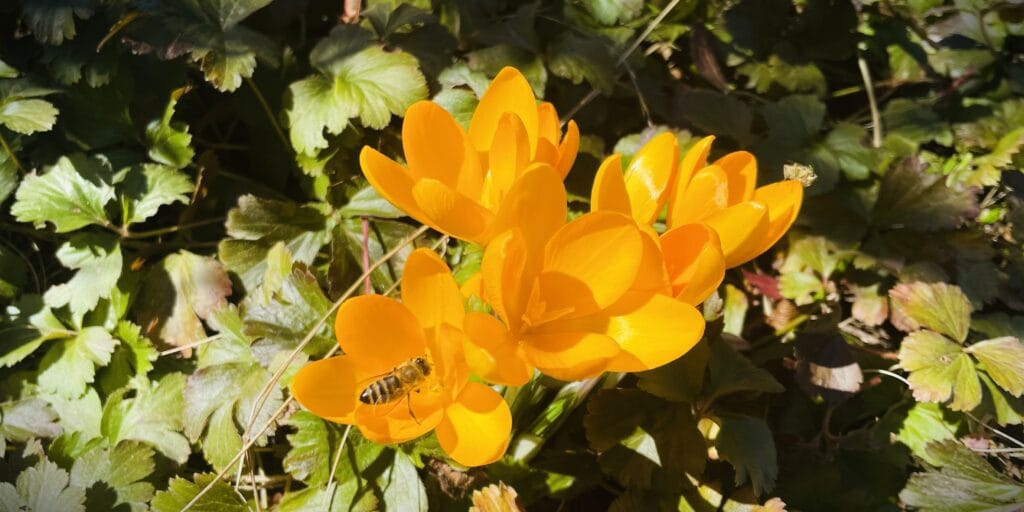
Once upon a time
thus I have heard
on one occasion
I was busy living
right here and now
it occurred to me
that all is passing
in impermanence
taken as a cause
by most humans
for lamentation
gives suffering
why not turn it
round upside up
take it as a cause
for good rejoicing
because suffering
is impermanent
it too will pass
making room
for ever more
may be happy
sooner or later
it will also end
this suffering
as cause goes
both directions
impermanence
at the very crux
of human views
be sad or happy
or neither nor
about passing
letting it all go
open up space
for what is here
comes and goes
never a vacuum
neither sad
nor happy
in silence
equanim
a real view
concentrate
see for yourself
directly know
diligent, ardent
and resolute
all fulfilled
here now.
“Heartfelt tears of joy” — can you feel them?
Once a wise man relinquished his views
A wise man … considers thus: ‘If I obstinately adhere to my view “Something is acceptable to me, something is not acceptable to me” and declare: “Only this is true, anything else is wrong,” then I may clash with the two others: with [one] who holds the doctrine and view “Everything is acceptable to me” and with [one] who holds the doctrine and view “Nothing is acceptable to me.” I may clash with these two, and when there is a clash, there are disputes; when there are disputes, there are quarrels; when there are quarrels, there is vexation.’ Thus, foreseeing for himself clashes, disputes, quarrels, and vexation, he abandons that view and does not take up some other view. This is how there comes to be the abandoning of these views; this is how there comes to be the relinquishing of these views.
— Majjhima Nikāya – the middle length discourses of the Buddha, translated from Pali by Bhikkhu Ñāṇamoli and Bhikkhu Bodhi – Dighanakha Sutta, 74.8, p. 605
Once upon a time in early spring